Executive Regulation
Planning, starting, and following through.
État d'Âme measures attention, executive regulation, cognitive speed and burnout, then turns those four scores into something a person can actually practise: short guided activities, cognitive minigames, and a calendar that plans around their energy. Practices and organizations bring it to their people, and what each person records stays theirs.
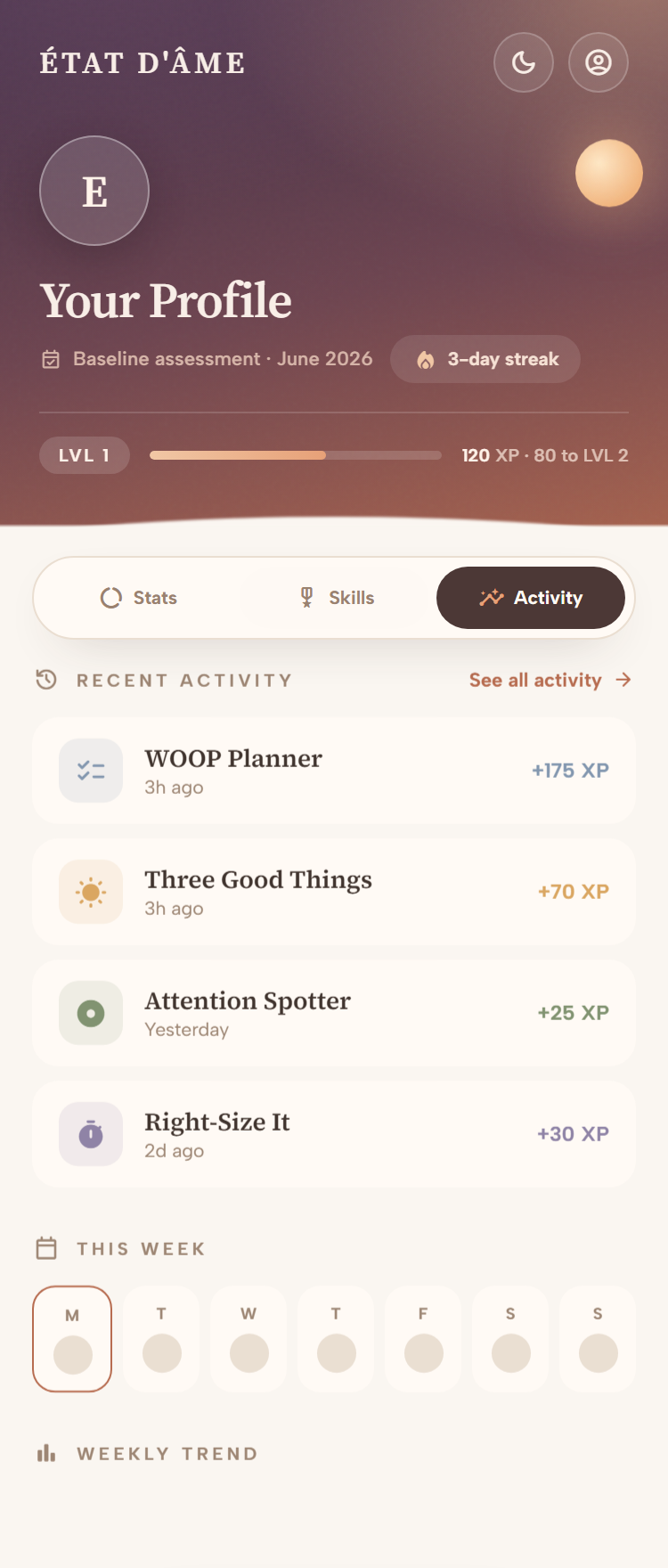
Planning, starting, and following through.
Holding focus, even around distractions.
Processing and switching between tasks.
How well recovery keeps up with demand.
A score on its own changes nothing. État d'Âme is built so that the assessment is the first five minutes, not the product.
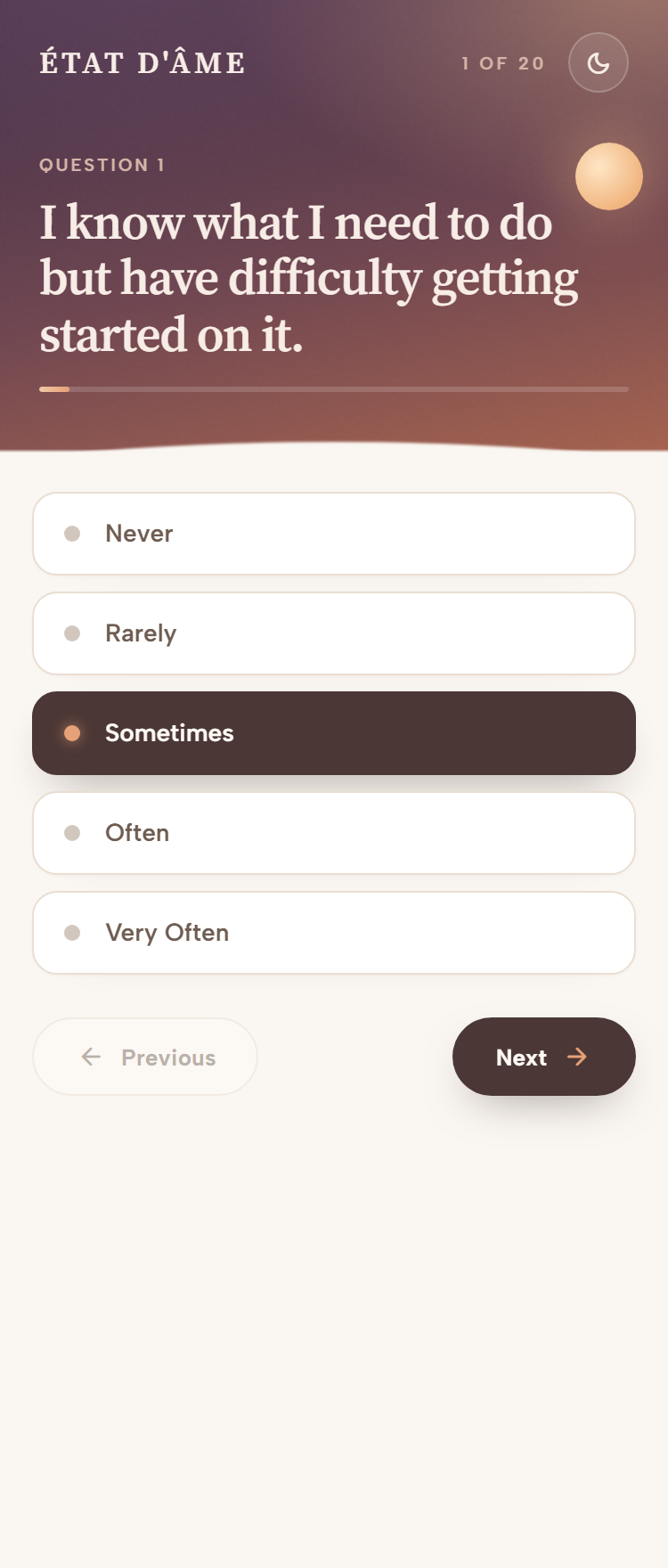
A structured self-report screener: 20 questions across four cognitive dimensions, done in about five minutes.
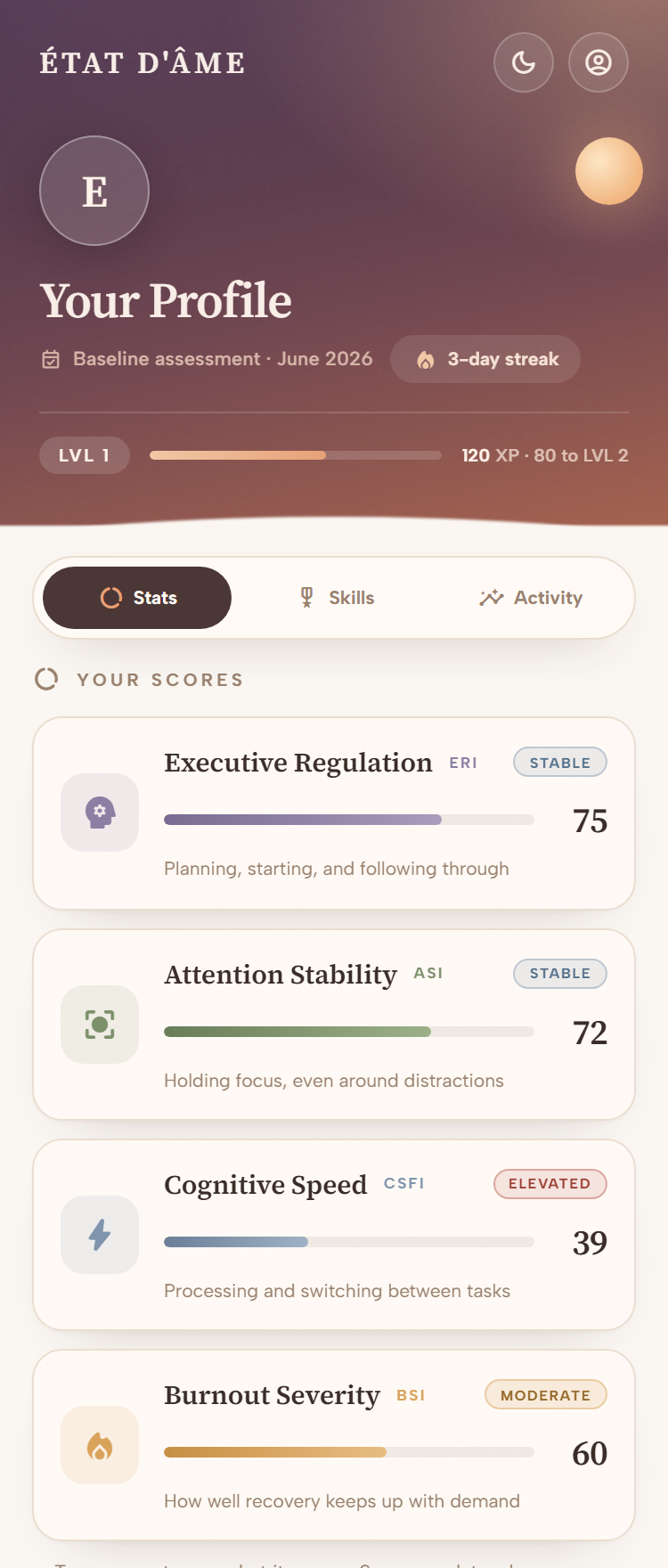
Your answers become four index scores, each tied to a specific part of cognitive functioning, each with its own status, from stable to elevated.
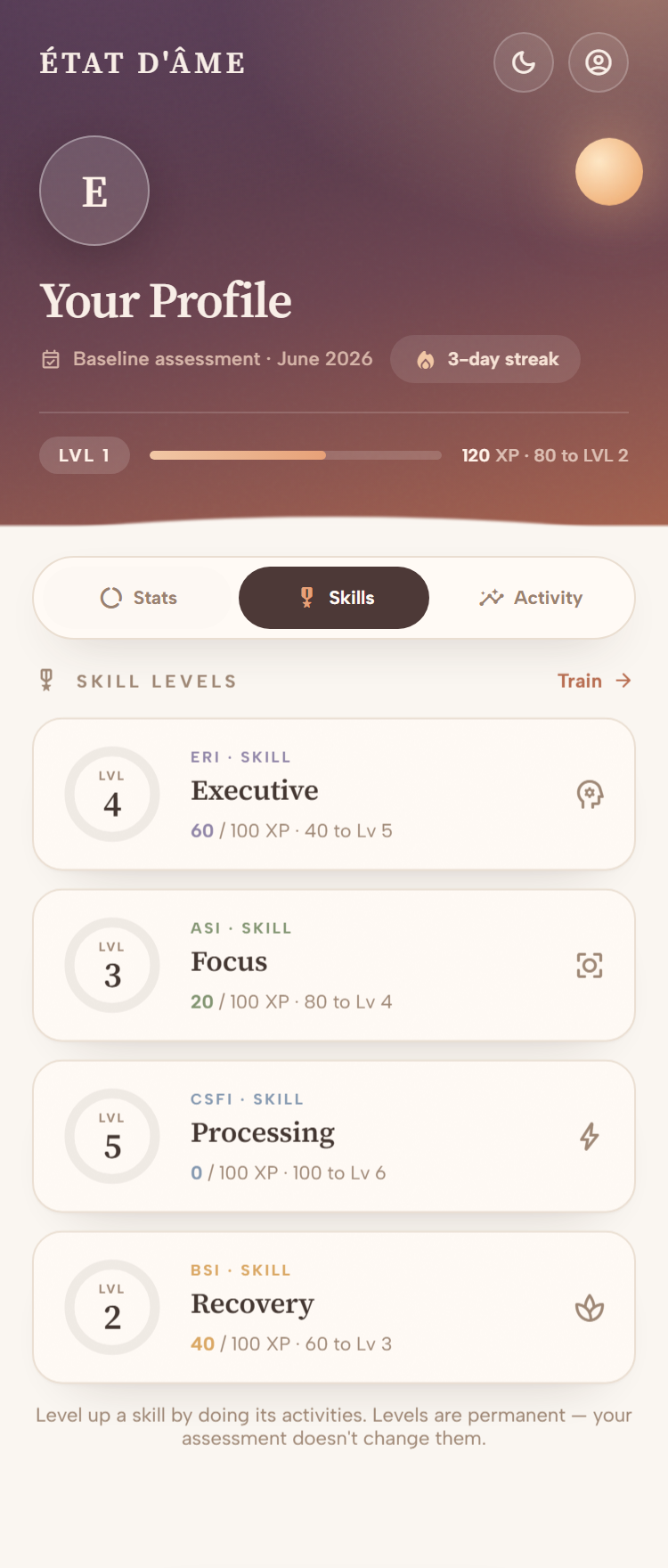
Each index maps to activities and minigames that train it. Do them, and the skills behind the score move with you.
Most calendars assume every hour is the same hour. This one starts from how much you actually have today, and helps you spend it deliberately.
Lower, typical or higher. The day reshapes around the answer instead of pretending yesterday's plan still fits.
An energy curve across your waking hours, with a live now-marker, so deep work lands where you have the room for it.
An unscheduled list holds the things you have not placed, so an unplanned task never has to become an urgent one.
Bring in what is already booked, so the plan you make is the plan against the day you actually have.
Saturday, September 5
A spacious morning, then a dip after lunch. Put the hard thing early.
Aug 31 – Sep 6
Thursday is carrying the most. Friday still has room, if something has to move.
2026
Each day shows the room it has left. Darker means fuller, a cue to protect the day rather than fill it.
Thursday is the fullest day of the week. Friday has the most room left.
Three blocks planned, one of them recovery. There is still room to shape this day.
Four minigames, each built around a single cognitive demand: set-shifting, selective attention, visual working memory, spatial recall. They are levelled, and XP banks the first time you clear each one.
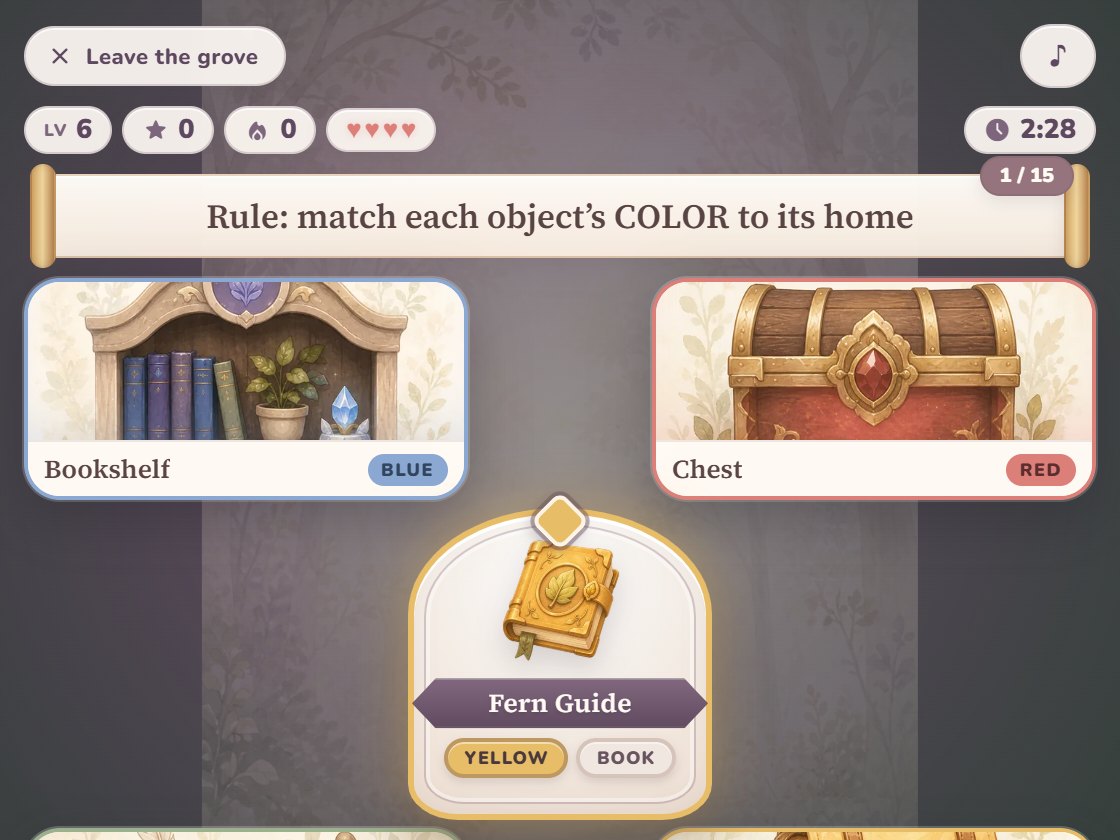
Sort enchanted objects into their homes by colour, then the rule switches to type partway through, and the colour you were relying on becomes the distraction. Six levels.
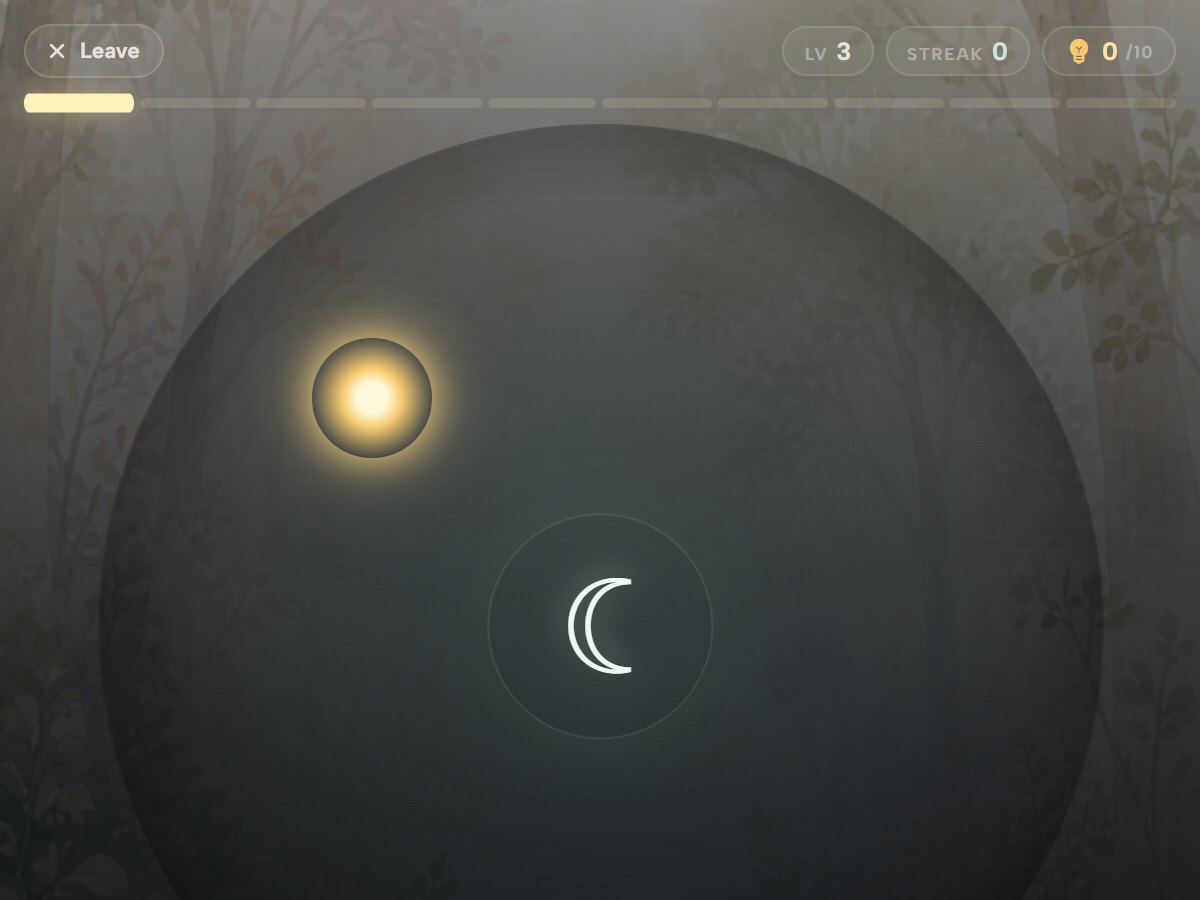
Hold a rune at the centre and a wandering wisp at the edge in a single glance, then drag the matching rune toward the remembered light. Capture seven wisps to restore each lantern.
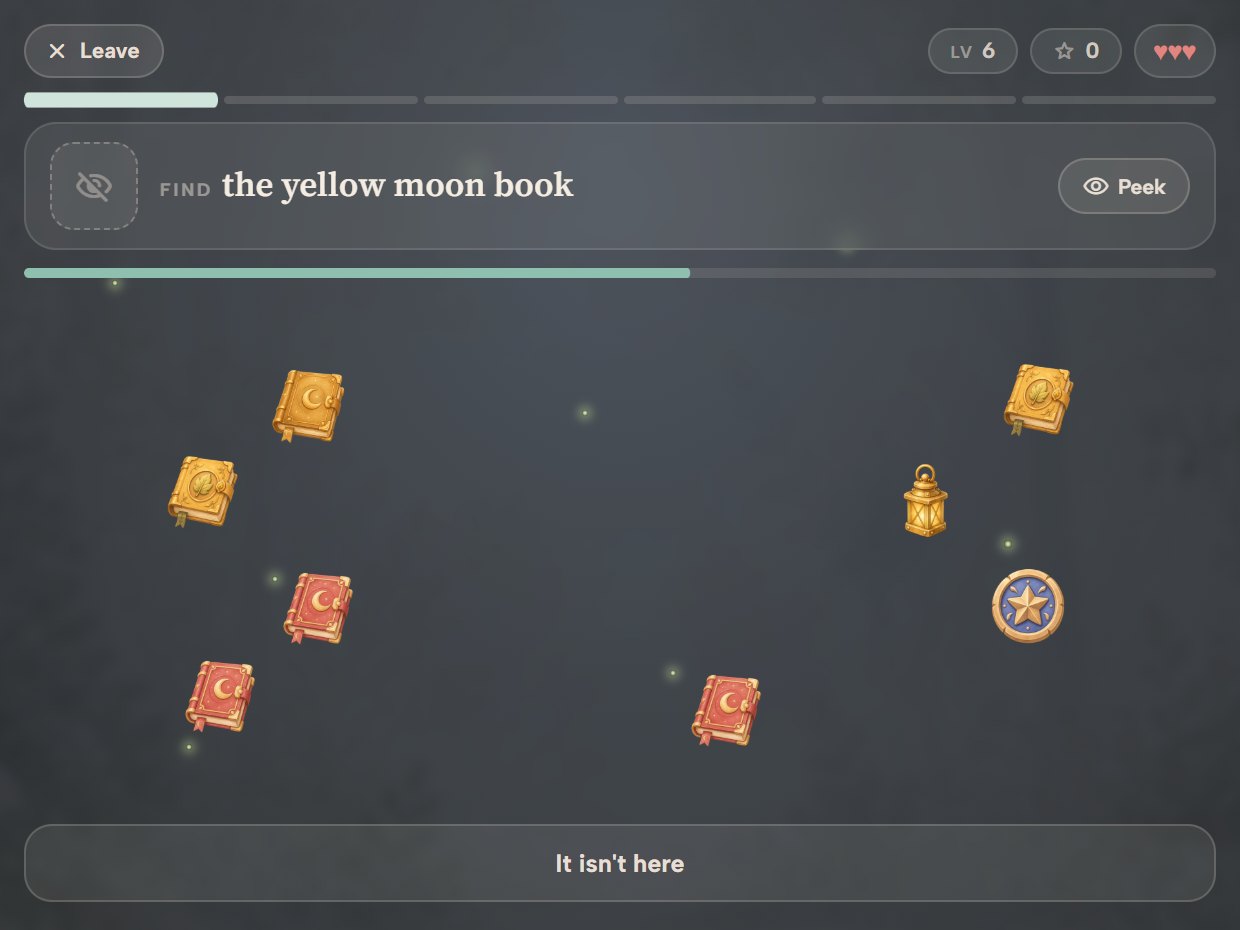
Find the one object matching on both colour and shape, in a garden full of things that match on only one. The first three levels teach the search; then the clock starts, the target starts hiding, and some rounds have nothing to find at all.
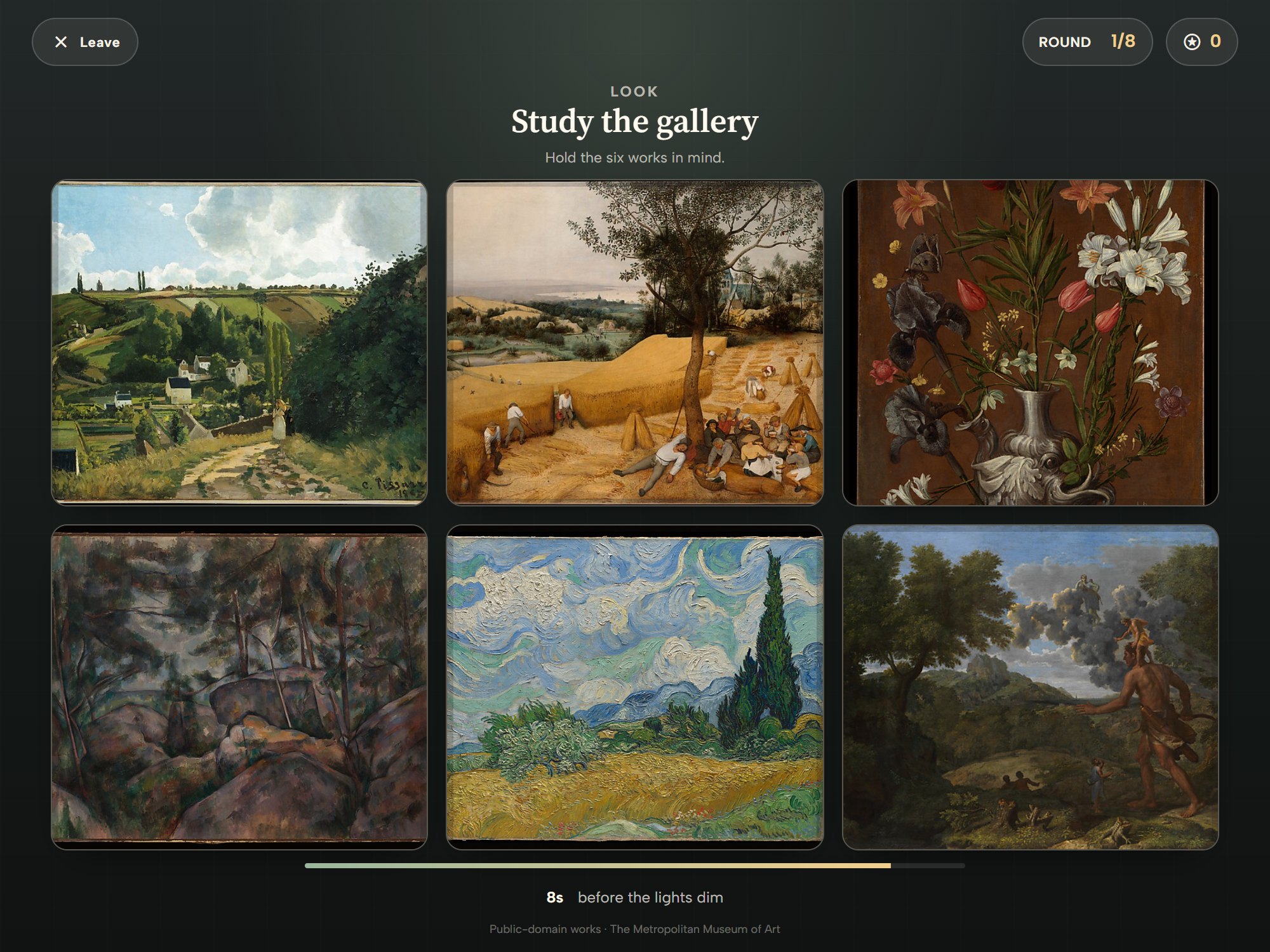
Study six paintings, hold the small gallery in mind, and spot the frame that returns with a different work. Eight rounds move from obvious changes to close visual cousins.
Every activity is short, finishable in one sitting, and tied to one of the four indices. Nothing here asks you to journal for an hour.
…and counting. New activities and minigames are in development.
Loading the activity library…
Practices and organizations each get a view designed for their work. Membership and permission to share are always kept separate.
Coordinate a care team, work with assigned clients, and see the same activity library your clients are working from.
Designed for a desktop screen
Aggregate, privacy-aware reporting designed to inform healthier decisions, without exposing any individual's data.
Designed for a desktop screen
Tell us whether this is for a practice, an organization or just you, and we will set it up.
Invited by your organization? Sign in and your workspace opens to the view your role allows.